Air Fryer Honey Mustard Salmon is the kind of dish that feels like a revelation—until you realize how simple it really is. Imagine tender, flaky fish kissed by the tangy warmth of Dijon mustard and the golden sweetness of honey, all crisped to golden perfection in your air fryer. It’s a recipe that bridges comfort and elegance, perfected for weeknight dinners but elegant enough for guests. For years, I’ve experimented with fish recipes in my own kitchen, often inspired by memories of my grandmother’s butter-poached salmon with a glaze made from pantry staples. This version feels like that same heartwarming classic, reinvented for modern kitchens and healthier cooking.
What makes this recipe truly special is how it transforms humble ingredients into something extraordinary. A drizzle of homemade honey mustard, the gentle air-fry magic, and the clean finish of a ready-in-12-minutes meal make it a revelation for anyone who’s been overwhelmed by the idea of cooking seafood. Whether you’re a beginner or a seasoned chef, this salmon will bring comfort, confidence, and a touch of quiet joy to your dinner table.
What is Air Fryer Honey Mustard Salmon?
This dish is a modern reimagining of classic honey mustard-glazed salmon. At its core, it’s a balance of bold, tangy, and sweet flavors, created using pantry staples like Dijon mustard, honey, and olive oil. The air fryer acts as the hero of the preparation, delivering a crispy skin (if your salmon has it) while keeping the interior buttery and tender. Unlike traditional methods that may require a stovetop and oil, this version relies on no added fats—just the natural moisture of the fish and the richness of the glaze.
While the honey mustard pairing is common in Western cuisines—think of honey mustard chicken or glazed pork—it’s particularly well-suited for salmon. The acidity in the mustard brightens the richness of the fish, while the honey caramelizes into a delicate crust. The result is a luxurious, restaurant-style dish achieved in your own kitchen with minimal effort. What makes it unique is the air fryer step, which eliminates the need for precise oven timing or worrying about uneven heat. It’s also perfect for home cooks who want to enjoy the flavors of a gourmet dish without spending hours in the kitchen.
Reasons to Try Air Fryer Honey Mustard Salmon
If you’re a home cook who values speed without sacrificing flavor, this recipe is for you. Salmon is one of the few proteins that straddles both healthy and indulgent—packed with omega-3s, lean protein, and a virtually infinite versatility for pairings. The honey mustard glaze adds a layer of complexity you’d normally associate with fine dining, yet this version is simple enough for a family meal. It’s perfect for busy weeknights, last-minute dinner ideas, or when you want to impress without prepping a full course.
It’s also a recipe that’s beginner-friendly. No need to wrestle with temperatures or worry about overcooking—just preheat the air fryer, coat the fish, and let the appliance do the rest. For those who aren’t confident cooking seafood, this method is forgiving. Plus, the honey mustard glaze is forgiving enough that you can adjust it to your taste, making it a great introduction to flavor-balancing techniques. It’s no wonder this recipe has become a staple in my own kitchen, often paired with a simple salad and crusty bread for the ultimate comfort meal.
Ingredients Needed to Make Air Fryer Honey Mustard Salmon
- 2 salmon fillets (about 6 oz each, with or without skin)
- 2 tbsp Dijon mustard (for tangy depth)
- 1 tbsp honey (adjust to taste for sweetness)
- 1 tbsp olive oil (helps the glaze cling)
- ½ tsp garlic powder (adds savory warmth)
- ½ tsp paprika (for color and a hint of spice)
- ¼ tsp salt (amplifies all the flavors)
- ¼ tsp black pepper (a nutty, earthy finish)
Instructions to Make Air Fryer Honey Mustard Salmon – Step by Step
Step 1:
Make the glaze in the simplest way possible. In a small bowl, whisk together Dijon mustard, honey, olive oil, garlic powder, paprika, salt, and black pepper until it forms a silky, cohesive mixture. Taste it and adjust based on your preference—add a bit more honey if you like a sweeter glaze, or more mustard for extra tang. This is your flavor foundation, so take a moment to get it right. I often taste it alongside a small piece of salmon if I have it on hand, but this step is intuitive. You want that balance where the honey’s sweetness shouldn’t overshadow the mustard’s bite.
Step 2:
Pat your salmon fillets dry with a paper towel. This might seem like a minor detail, but it’s key for ensuring the glaze sticks properly instead of sliding off during cooking. Once the fish is dry, work the glaze into its surface with a brush. Make sure to coat both the top and sides, letting the mixture settle into any nooks. If your fillets have skin, leave that aside—trust the air fryer to work its magic on the glaze.
Step 3:
Preheat your air fryer to 390°F (200°C) for 2–3 minutes. I know it might feel excessive, but preheating ensures that the fish benefits from even heat as soon as it hits the basket. Skipping this step can mean visible inconsistencies in the final dish, like a soft glaze instead of a perfectly crisped crust.
Step 4:
Arrange the salmon in the air fryer basket, ensuring they don’t touch to allow proper air circulation. Cook for 8–10 minutes, depending on the thickness of your fillets. The timing is never an exact science, so check the salmon’s doneness by gently flaking it with a fork. You want it to be tender, with an internal temperature of 145°F (63°C). I always set a timer for 8 minutes first and then check, adding an extra minute or two if needed.
Step 5:
Let the salmon rest on a serving dish for a few minutes before serving. This extra time gives the juices a chance to settle and makes the fish easier to serve. I often garnish it with a bit of fresh dill or parsley for color, but that’s optional. The main goal is to keep it centered on the balance of flavor and texture.
Chef’s Tips for a Perfect Result
- Use room-temperature salmon: Cold fillets can cause uneven cooking. For the best results, take them out of the fridge and let them sit for 10–15 minutes before glazing.
- Don’t skip the preheat: The air fryer needs time to reach the correct temperature. This sets the glaze into place right away, preventing it from sliding off the fish.
- Cook in a single layer: Overcrowding the basket means the fish won’t cook evenly. If you have two fillets that don’t fit side by side, rotate them halfway through.
- Rest the salmon: Allowing it to sit for a few minutes before serving keeps the texture tender and prevents the glaze from sliding off your plate.
- Use a meat thermometer: This ensures the fish is fully cooked. Insert it into the thickest part for accuracy.
Variations and Substitutions
- Vegan Option: Swap honey with agave syrup and ensure your mustard is vegan (most Dijon is, but check labels). Use olive oil to keep it binding.
- Gluten-Free Alternative: Most Dijon mustard is gluten-free, but confirm with your brand. Some artisanal mustards contain traces of gluten.
- Low-Carb Version: Serve with a simple squeeze of lemon and a side of steamed kale. Skip rice or pasta-based sides.
- Budget Swap: Use cod instead of salmon. It soaks up the glaze just as well and is often more affordable. Just be mindful that it cooks more quickly, usually in 6–8 minutes.
- Spicy Spin: Add a pinch of cayenne pepper or a drizzle of sriracha to the glaze for a layer of heat. This is especially nice if you’re serving with a cooling yogurt dip or cucumber salad.
How to Serve and Pair
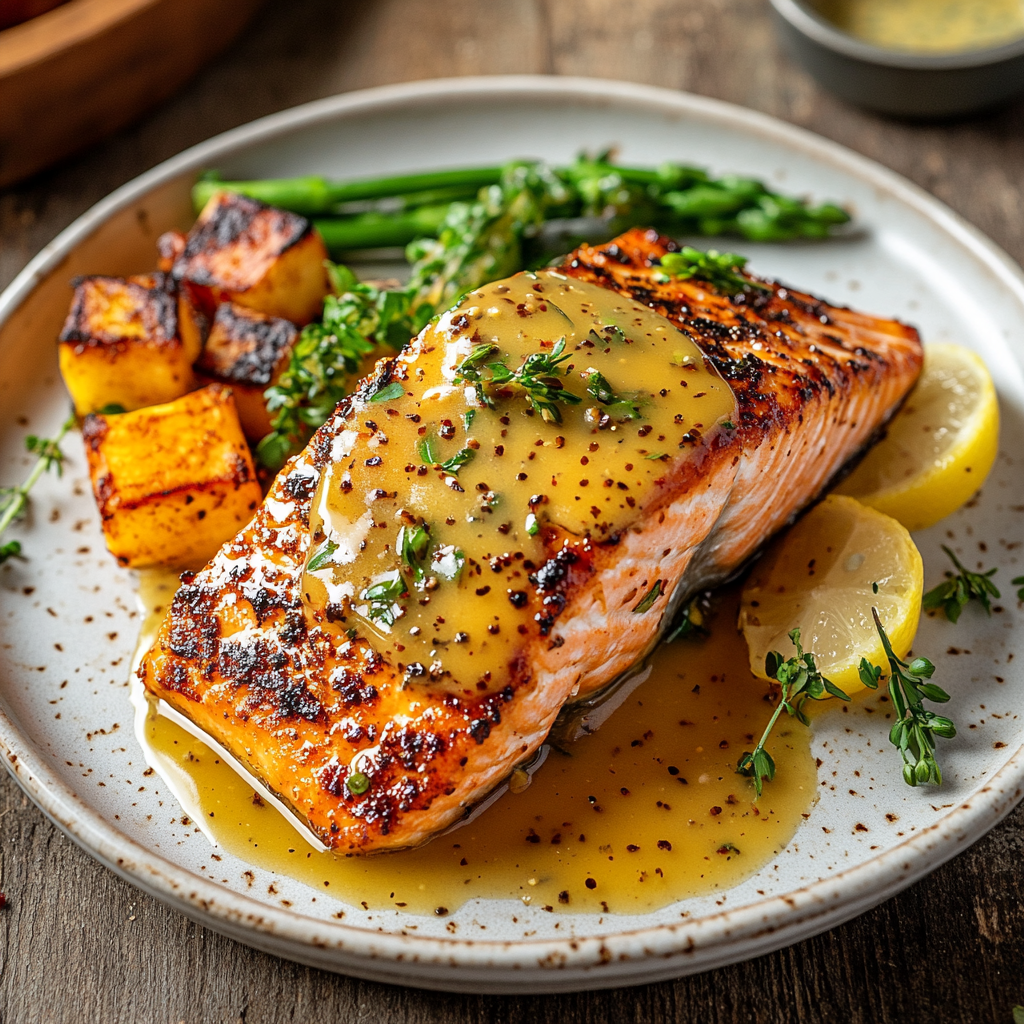
Air Fryer Honey Mustard Salmon is at its best when dressed up with sides that complement its bold flavors. I love serving it on a bed of herbed quinoa or with a scoop of lemon-herb rice for a touch of acidity. For a vibrant contrast, a simple green salad with cherry tomatoes and a light vinaigrette adds crisp brightness. On occasion, I’ve even paired it with roasted Brussel sprouts or steamed asparagus, grilled until just tender.
When it comes to beverages, the salmon’s sweet and savory character pairs beautifully with crisp white wines like pinot grigio or chardonnay. For non-alcoholic options, a sparkling water with lemon hits the right notes of effervescence and zest. Presentation-wise, arrange the salmon on a white or wooden platter—its golden hue and glossy glaze are already visually satisfying without much extra. Garnish with microgreens or edible flowers if you want to add a touch of extra elegance.
Storage and Reheating
Refrigerator: Store in an airtight container for up to 3–4 days. Place parchment paper between fillets to prevent sticking.
Freezer: Wrap tightly in plastic wrap, then in aluminum foil. Freeze for up to 3 months. Thaw in the fridge overnight before reheating.
Room Temperature: Keep covered for up to 2 hours. Beyond that, it’s best to refrigerate to maintain quality and safety.
Reheating: The best method is to use the air fryer at 350°F (175°C) for 3–4 minutes to restore crispiness. Avoid the microwave, as it tends to soften the glaze. If the fish feels dry, you can spritz it lightly with water before reheating to preserve moisture. If using the oven, place it on a parchment-lined tray and reheat at 300°F (150°C) for 10–12 minutes, covered with foil to retain juices.
Nutritional Values
- Calories: 320 per serving
- Protein: 34g
- Carbohydrates: 6g
- Fat: 18g
- Fiber: 0.5g
Approximate values.
Frequently Asked Questions
Can I use a different type of fish instead of salmon?
Yes—cod, haddock, or even white fish fillets work well with the glaze. Just adjust the cooking time based on the fish’s thickness.
How do I know when the salmon is fully cooked?
It’s done when it flakes easily with a fork and reaches an internal temperature of 145°F (63°C). Avoid overcooking, as the texture becomes dry.
Why did my salmon stick to the air fryer basket?
Mist the basket with cooking spray or line it with parchment paper next time. Wet the fillet too much before glazing, or you’ll create surface condensation during cooking.
Can I make the glaze in advance?
Absolutely! Make it up to 24 hours ahead and store in an airtight container in the fridge. Stir well before using to recombine any separated oils.
How can I customize the glaze?h3>
Add a drizzle of sriracha for heat, a splash of soy sauce for depth, or a sprinkle of lemon zest for extra brightness.
Conclusion
Air Fryer Honey Mustard Salmon is the perfect intersection of healthy, delicious, and effortless cooking. With its golden,it feels like a treat you should save for weekends, yet stays simple enough for weeknight routines. Whether you’re cooking for one or sharing it with loved ones, this recipe brings comfort, flavor, and a quiet sense of accomplishment to any table. One bite of the honey mustard-kissed salmon, and you’ll understand why it’s become a favored recipe in my own kitchen.
Print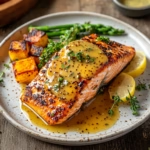
Air Fryer Honey Mustard Salmon for a Sweet and Savory Masterpiece
- Prep Time: 5
- Cook Time: 12
- Total Time: 17
- Yield: 4 servings 1x
- Category: dinner
- Method: Air Frying
- Cuisine: American
Description
Crispy yet tender salmon glazed with a tangy, sweet honey mustard sauce and air fried to golden perfection. A quick, elegant dish perfect for weeknights or impressing guests with minimalist effort.
Ingredients
4 salmon fillets (4–6 oz each)
2 tbsp olive oil
1/4 cup Dijon mustard
2 tbsp honey
1 tsp minced garlic
Salt and black pepper to taste
1 tbsp fresh lemon juice
Instructions
Preheat air fryer to 375°F (190°C)
Place salmon fillets in air fryer basket, skin-side down if using skin-on fillets
In a small bowl, whisk together Dijon mustard, honey, olive oil, garlic, lemon juice, salt, and pepper
Brush glaze generously over salmon
Air fry for 10 minutes, then flip fillets and air fry for 2 more minutes (or until salmon is opaque and flaky)
Let rest 3–5 minutes before serving
Notes
For best results, use fresh garlic and avoid pre-ground spices for bolder flavor
If avoiding olive oil, substitute with avocado oil or increase water spray mist
Serve with steamed vegetables, quinoa, or a fresh salad for a complete meal
Leftovers freeze well for up to 3 months
Nutrition
- Serving Size: 1 salmon fillet
- Calories: 220
- Sugar: 6g
- Sodium: 480mg
- Fat: 15g
- Saturated Fat: 2g
- Carbohydrates: 5g
- Fiber: 0g
- Protein: 22g
- Cholesterol: 65mg